Basement Waterproofing NJ for Preventing Mold Growth in Damp Spaces
A damp basement rarely stays a basement-only problem. Moisture travels. It moves into framing, insulation, flooring, stored belongings, and the air your family breathes upstairs. In New Jersey, where older housing stock, heavy seasonal rain, high water tables in some areas, and humid summers often collide, basements can become the perfect environment for mold if water control is handled too late or too lightly.
Homeowners often notice the obvious signs first. A musty odor hangs in the stairwell. Cardboard boxes turn soft at the corners. Paint begins to bubble. A dehumidifier runs constantly but the air still feels clammy. Sometimes there is no standing water at all, just chronic dampness that never quite dries out. That is enough. Mold does not need a flood. It needs moisture, a surface to colonize, and a little time.
That is why Basement Waterproofing NJ is not just about stopping puddles. It is about controlling the entire moisture cycle in a below-grade space so mold never gets a foothold. The best waterproofing work addresses where water comes from, how it moves through a foundation, where humid air condenses, and what building materials can tolerate basement conditions over the long term.
Why basements in New Jersey struggle with moisture
New Jersey homes face a mix of conditions that make basement moisture more common than many owners expect. In some towns, clay-heavy soils hold water against foundation walls after rain. In others, older stone or block foundations let water seep through joints and porous surfaces. Near the shore, humidity adds another layer of trouble. In hillier areas, water from sloped yards can push toward the house during storms.
A lot of basements were also not built with modern drainage details. Homes from the early to mid 20th century often have minimal exterior waterproofing, aging footing drains, or no meaningful vapor control under slabs. Add a few decades of settlement, clogged gutters, short downspouts, cracked mortar joints, and worn window well seals, and moisture starts finding easy paths inside.
I have seen homeowners focus only on the last visible symptom, such as a damp carpet tile or a black spot behind stored bins, when the real cause was outside. One house had a consistent mold problem on one finished basement wall. The owner had repainted twice. The actual issue turned out to be a downspout that discharged only a foot from the corner of the foundation. Every heavy storm loaded that wall with water. No interior paint was ever going to solve that.
Mold starts earlier than most people think
People usually imagine mold as the aftermath of a major leak. In practice, many basement mold problems grow under quieter conditions. Relative humidity above about 60 percent can support mold growth on dust, paper facings, wood, fabric, and drywall, especially in stagnant corners. A cool concrete wall can also create condensation when warm humid air enters the space in summer.
That means a basement can look mostly dry and still support mold. The trouble spots are often hidden. Behind finished walls, under vinyl flooring, beneath area rugs laid over slab, inside closed closets, and around rim joists are common locations. If the basement smells musty every time the weather turns humid, that smell is valuable information. It often points to a chronic moisture condition, not a one-time spill.
Mold prevention depends on breaking one of its basic requirements. Since basements naturally offer cool surfaces and many organic materials, moisture becomes the practical target. Waterproofing, drainage, air sealing, and humidity control work together to keep those surfaces dry enough that mold cannot establish itself easily.
What basement waterproofing actually means
The phrase gets used loosely, and that creates confusion. Some contractors mean a full exterior excavation with wall membrane and footing drains. Others mean an interior drainage system with a sump pump. Some mean crack injection. Some mean a dehumidifier and vapor barrier. All of those can be useful, but they solve different problems.
Basement Waterproofing NJ should start with diagnosis, not product selection. Water enters or accumulates in basements through several main pathways:
- Surface water draining toward the house
- Groundwater pressing against foundation walls or rising under the slab
- Humid air condensing on cool surfaces
- Plumbing leaks, appliance discharge, or interior moisture loads
- Vapor moving through porous concrete and masonry
Each pathway calls for a different response. If the issue is hydrostatic pressure under the slab, interior drainage may be effective. If the problem is bulk rainwater from poor grading, the first dollars should go outside. If the basement feels damp only from June through September, air sealing and dehumidification may matter more than excavation.
A proper waterproofing plan is often layered. Rarely is there one silver bullet.
The warning signs that deserve a closer look
Some symptoms are easy to dismiss because they develop slowly. Efflorescence, that white powdery residue on masonry, is one of them. It is not mold, but it tells you water has moved through the wall and https://pastelink.net/mfolae1u left salts behind. Peeling paint on foundation walls often means moisture pressure from behind the coating. Rust on metal shelving, screws, or appliance housings can signal elevated humidity. Warped trim or swollen door casings in a basement finish-out are also worth attention.
A basement does not need to flood to justify corrective work. In fact, mold prevention is far less expensive when you act before finishes are contaminated. Once drywall, insulation, carpet pad, or stored contents are affected, the cost shifts from moisture control to moisture control plus remediation and replacement.
One pattern that comes up often in New Jersey homes is the semi-finished basement that was improved over time without a moisture strategy. A homeowner paints the walls, installs laminate flooring, adds a couch, maybe builds a small office or playroom. The space looks clean and dry. Then one muggy summer, the flooring cups or a corner smells off. The basement was never truly dry enough for those materials. It was simply dry enough to seem fine for a while.
Exterior corrections usually deliver the best first return
Homeowners naturally think of the inside because that is where the problem shows up. But many basement issues start outdoors, and outdoor corrections can reduce the water load dramatically before it ever reaches the wall.
Gutters and downspouts are the simplest example. If roof runoff dumps near the foundation, the soil beside the house becomes saturated quickly. During a strong storm, that water has nowhere useful to go but down and against the foundation. Extending downspouts well away from the house, keeping gutters clear, and making sure discharge does not boomerang back on a walkway or neighboring grade can make a measurable difference.
Grading matters too. The ground should slope away from the house so rainwater does not collect near the walls. Even a subtle depression along one side can become a seasonal trouble zone. I have seen plenty of homes where decorative landscaping, mulch buildup, and settled walkways quietly reversed the original grade over the years.
Window wells are another frequent source of leaks. If they fill during storms or their drains are clogged, water can work around basement window frames and into the wall system. The fix may be as simple as clearing drains and adjusting grade, or as involved as replacing the window assembly and adding a proper well cover.
Exterior waterproofing becomes the stronger option when walls show active seepage through multiple areas, when there are structural cracks allowing water entry, or when a foundation has no reliable exterior membrane and the owner wants the most complete barrier possible. It is more disruptive and more expensive, but on some homes it is the right long-term move.
Interior systems and when they make sense
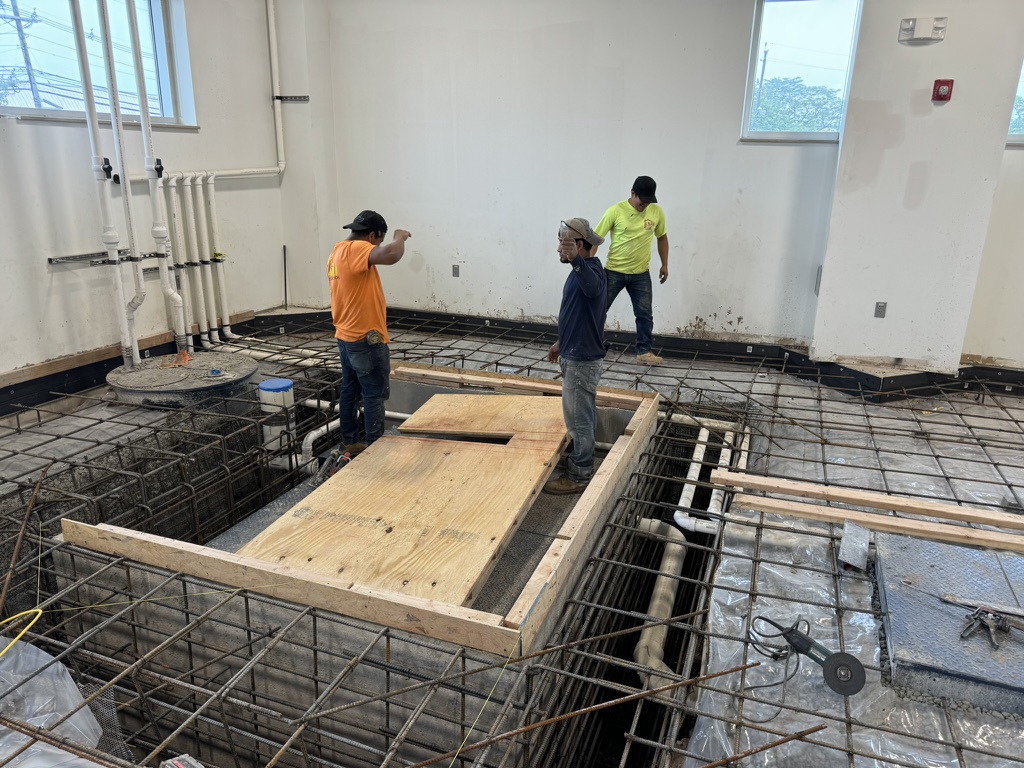
Not every basement problem requires excavation. Interior drainage systems can be highly effective when groundwater or wall seepage is the main issue. These systems generally collect water at the perimeter and direct it to a sump basin, where a pump discharges it away from the house. The principle is practical: instead of trying to hold back all subsurface water at the wall face, manage it safely once it reaches the foundation perimeter.
For homes with recurring seepage at the cove joint, where the wall meets the slab, interior drainage is often a strong solution. It can also help where the slab itself is transmitting moisture upward. The key is proper installation, dependable pump sizing, check valves, discharge routing, and backup power when flooding risk is high. In New Jersey storm seasons, a sump pump without battery backup can turn a near-solution into a failure at exactly the wrong moment.
Interior systems do not eliminate every moisture concern on their own. They manage liquid water, but you may still need dehumidification, wall vapor control, and material choices that tolerate below-grade conditions. This is where some homeowners get disappointed. They install a drainage channel and expect the air to feel desert-dry. That is not what the system is designed to do.
Humidity control is not optional
Even after bulk water is controlled, many basements remain too humid through warm months. A dehumidifier is not a cosmetic add-on. In many damp spaces, it is a core part of mold prevention. Good waterproofing lowers the moisture load. Good dehumidification keeps ambient humidity in a safe range.
The target many professionals aim for is roughly 45 to 55 percent relative humidity in the basement, depending on season and conditions. Lower is not always better if it becomes impractical or drives up energy use, but sustained levels above 60 percent invite trouble. A portable dehumidifier may be enough for a small unfinished area. Larger finished basements often benefit from a dedicated unit with continuous drainage.
Air sealing also deserves more credit than it usually gets. Warm outdoor air entering through rim joists, utility penetrations, or leaky bulkhead doors can condense on cool basement surfaces. Sealing these pathways reduces latent moisture loads. Insulating rim joists properly can further cut condensation risk, especially in older homes.
One caution here: not every insulation approach belongs in a basement. Fiberglass batts against foundation walls, particularly behind finished framing, are notorious for hiding moisture problems. If the wall gets damp, the fiberglass does little to stop it, and the facing can become a mold food source. More moisture-tolerant assemblies usually perform better below grade.
Materials matter more than finishes
A beautiful basement can fail quietly if it is built with the wrong materials. This is one of the most expensive lessons homeowners learn. Standard drywall, plush carpet with absorbent pad, untreated wood in direct contact with slab, and low-grade laminate flooring all struggle in spaces with even moderate moisture variation.
If the basement has a history of dampness, or if it is being finished after waterproofing, material selection should reflect reality, not wishful thinking. Rigid foam or closed-cell spray foam in the right assembly can outperform batt insulation at foundation walls. Inorganic or mold-resistant wall products often hold up better than standard drywall in vulnerable zones. Flooring with better tolerance for occasional moisture exposure is a safer bet than traditional basement carpet.
This does not mean every basement has to look utilitarian. It means the hidden layers need to be chosen with basement physics in mind. I have walked through finished lower levels that looked excellent on day one and required major tear-out within three years because the walls were framed and insulated as though they were above grade. The homeowners had not made a decorating mistake. They had made a building-science mistake.
How to judge whether a contractor understands the real problem
The waterproofing industry includes excellent specialists and some very aggressive sales operations. A homeowner can get three estimates and hear three entirely different diagnoses. That happens because different companies lead with different methods. One may specialize in interior drainage, another in exterior excavation, another in coatings, another in foundation repair.
What you want is not a canned pitch. You want someone who can explain why water is present, where it is moving, what evidence supports that, and what limitations each proposed fix has.
A useful conversation with a contractor should cover these points:
- Where the moisture is coming from, not just where it appears
- Whether the issue is bulk water, groundwater, vapor, humidity, or a combination
- What work belongs outside versus inside
- How the proposed system will be maintained over time
- What materials should and should not be used if the basement is finished
Be wary of absolute promises that ignore context. A coating alone rarely solves an active water intrusion problem. A sump system alone does not address humid air condensation. A dehumidifier alone will not overcome water entering through foundation cracks. Good advice usually sounds more nuanced than a sales script.
Cost, disruption, and the value of doing the right work first
Prices vary widely depending on basement size, access, finish level, and the severity of the moisture issue. Simple exterior drainage corrections can be relatively modest. Crack repairs may be targeted and cost-effective. Full perimeter systems, pump installations, or exterior excavation can be significant investments. Mold remediation and reconstruction add another layer if damage is already present.
The cheapest option is often the most expensive over a five-year stretch if it only masks the problem. I have seen homeowners spend small amounts repeatedly on sealers, fresh paint, and replacement storage bins while moisture kept working behind the scenes. Once mold spreads into insulation, framing edges, and contents, the true bill grows fast.
The better approach is to sequence the work correctly. Stop the source. Manage the remaining moisture. Dry the space thoroughly. Then finish or refinish with compatible materials. That order matters. When people reverse it, they trap problems inside the assembly.
Seasonal timing and mold prevention after storms
Spring and late summer tend to reveal a lot in New Jersey basements. Spring brings rain and snowmelt in some years. Late summer brings warm, saturated air and heavy storms. If you are evaluating a basement, these seasons often expose weaknesses more clearly than a dry winter week.
After any significant water event, speed matters. Wet porous materials should be assessed quickly, and the basement should be dried aggressively within the first day or two if possible. The longer materials stay damp, the higher the risk of microbial growth. This is especially true for finished basements, where insulation cavities and subfloor layers may stay wet long after surfaces appear dry.
Homeowners sometimes underestimate how far moisture travels after a small seepage event. Water can wick into baseboards, the lower edge of drywall, stored fabrics, and adjacent rooms. If the basement has recently taken on water, it is worth checking hidden spaces, not just the obvious wet area.
When a basement can be safely finished, and when it should stay simple
Not every basement is a good candidate for a fully finished living space, at least not without substantial upgrades. If a foundation has persistent seasonal seepage, no reliable drainage path, and high humidity, finishing it like a first-floor family room is asking a lot of the space. In those cases, a simpler use, such as storage, laundry, exercise, or workshop area with moisture-tolerant materials, may be the smarter call until the envelope is improved.
That may sound conservative, but it is usually cheaper than rebuilding. A basement does not have to become premium living area to be clean, healthy, and useful. Sometimes the best professional advice is to reduce the ambition of the finish plan until the moisture profile supports more.
On the other hand, many New Jersey basements can be successfully finished and stay mold-free for years when the groundwork is done properly. The difference is not luck. It is diagnosis, water management, humidity control, and disciplined material choices.
The real goal is a stable basement, not just a dry floor
A single dry day after a storm does not prove a basement is solved. What matters is stability across seasons. Does the air stay within a reasonable humidity range in July? Do wall surfaces remain dry after three days of rain? Do stored items come through the summer without musty odor? Does the basement feel consistent, not just passable?
That is the standard homeowners should use when thinking about Basement Waterproofing NJ. The goal is not merely to chase visible leaks. It is to create a below-grade space that resists mold because moisture is being controlled from several angles at once.
When that happens, the benefits go beyond the basement itself. Indoor air quality improves. Stored belongings last longer. Finishes hold up. Mechanical equipment runs in a less corrosive environment. The house feels more solid because one of its most vulnerable areas is no longer working against the rest of the structure.
Mold prevention in a damp basement is rarely glamorous work. It is drainage, slope, sealing, pumps, vapor control, air management, and careful construction decisions. But those are the details that protect the house for the long run. And in New Jersey, where moisture pressure on basements is common and persistent, those details are often the difference between a basement that merely looks clean and one that truly stays healthy.
ARD Waterproofing
Address: 98 Smull Ave, West Caldwell, NJ 07006
Phone number: +12016465936
FAQ About Basement Waterproofing NJ
What is the best waterproofing method for a basement?
The best overall approach to waterproofing a basement is a combined exterior and interior system that stops water at the foundation wall and safely manages any moisture that gets through.
What is the average cost to waterproof a basement?
The average cost to waterproof a basement ranges from $2,500 to $15,000, with most homeowners paying around $5,200 for a complete project.
Can a basement be waterproofed from the inside?
Yes, a basement can be waterproofed from the inside, and it is often the most affordable and least disruptive method.